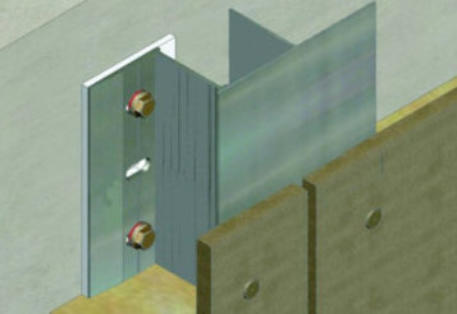
Aluminum and galvanized profiles are used in rivet system. The rivet
points of the panels and the carrier profiles are drilled 8mm in diameter
(sliding point). They are mounted to the system with rivets of 4.8mm
diameter. The head diameter of the rivets should be 14-16 mm. Certain
points of the panels are drilled to the same size (4.8mm) as the rivet
diameter (fixing point). The color of the rivets can be the same as the color
of the aluminum or the color of the panel. Screwing is the most common
system for fixing Viroc panels in terms of efficiency and ease of
application. The substructure can be metal or wood. Due to the similarity
of performance of the materials, it is more convenient to use wood
substructure. In outdoor applications, the relative humidity difference in the
air and the exposure of the panels to the sun causes a size difference in
the boards. Therefore, the use of a screw with a head greater than the
diameter of the drill hole in the plate is recommended because it allows
expansion and contraction to occur without creating any tension.Screws to
be used on exterior facades should be stainless steel.
Viroc panels with a maximum thickness of 10mm can be fixed to a metal
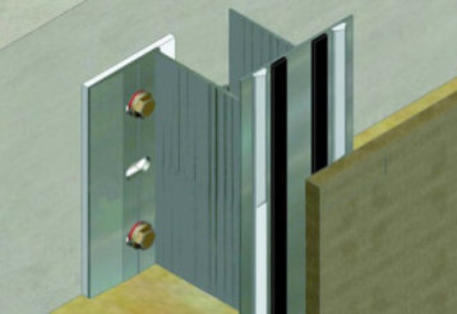
or wood substructure with adhesive fixing system. The adhesive system
generally consists of an adhesive (polyurethane, MS Polymer or hybrid
paste), a double-sided adhesive tape, and a primer set to be applied to
the substructure. It is not recommended to use the adhesive system
outdoors. In countries with special fire regulations, this system is not
allowed, as adhesives such as polyurethane, MS polymer etc. do not
have fire resistance.
FIXING SYSTEM WITH RIVET OR SCREW
FIXING SYSTEM WITH ADHESIVE
SARGRUP İNŞAAT VE ENERJİ LİMİTED ŞİRKETİ


T: +90 212 418 45 35
M: +90 532 211 27 94
info@sargrup.com.tr
Viroc
cement
particle
boards
can
be
fixed
by
either
mechanical
screw-fix
or
adhesive.
The
structure
supporting
the
Viroc
boards
must
be
aligned
and
levelled
to
ensure
the
board
does
not
warp.
The
sub-structure
used
is
either
treated
dry
pine
beams
or
metallic
profiles
made
from
galvanised steel or aluminium.
Whilst
the
screw-fix
approach
is
the
most
common
method
of
fixing
due
to
ease
and
efficiency,
Viroc
boards
can
also
be
bonded
onto
a
metal
or
wooden
sub-structure
using
a
polyurethane,
MS
polymer
or
hybrid
mastic adhesive.
Nailing
is
another
method
of
fixing
the
board
to
the
substrate,
and
can
only be used with wooden structures – ideally indoor.
VIROC BOARDS - INSTALLATION
GENERAL GUIDELINES ON VIROC BOARD PREPARATION
Cutting
Viroc
boards
are
easy
to
fabricate,
just
like
wood.
For
thicknesses
up
to
19mm,
circular
saws
are
ideal
and
for
greater
thicknesses,
the
support
of
a
workbench
is
recommended
to
support
safety
requirements
as
well
as
ensuring
even
surface
quality.
A
jigsaw
is
ideal
for
curved
cuts
(using
the
correct blade depending on wood or metal).
Drilling
A
conventional
hammer
drill
is
ideal
for
drilling
into
the
Viroc
board,
using
drill components suitable for drilling metal.
Sanding
Viroc
board
can
be
pre-fabricated
with
a
sanded
finish.
When
the
board
is
sanded,
wood
particles
become
visible
on
the
board
surface,
enhancing
the
board’s
natural
appeal.
The
thickness
tolerance
of
the
sanded
board
is
± 0.3 mm.
Machining of edges
Using
a
router,
the
edges
of
the
panel
can
be
machined
to
form
bevel,
tongue-groove
or
half
lap
joints.
The
tooling
pieces
should
be
tungsten
carbide.
Varnish
The
Viroc
panel
can
be
varnished
to
improve
protection
against
UV
and
rain.
Continuous
and
steady
application
is
recommended
to
support
a
uniform finish. Solvent based acrylic varnishes are ideal for application.
Painting
The
Viroc
panel
can
be
painted
for
decorative
purposes
with
a
large
variety
of
paints
or
coatings.
A
paint
finish
can
contribute
to
the
protection
and
longevity
of
the
panel,
as
well
as
add
aesthetic
dimension to the overall build.